
Neurophysiology Service
Advanced
Neurophysiology
Services
Comprehensive neurophysiology testing to diagnose disorders of the brain, nerves, and muscles with accuracy and care. Our Neurophysiology Lab is equipped with advanced technology and experienced specialists to deliver precise diagnostic results.
-
Advanced
Technology
-
Fast &
Accurate Reports
-
Experienced
Neurophysiologists
-
Trusted Hospital
Since 25+ Years
Our Neurophysiology Tests
Electroencephalogram (EEG)
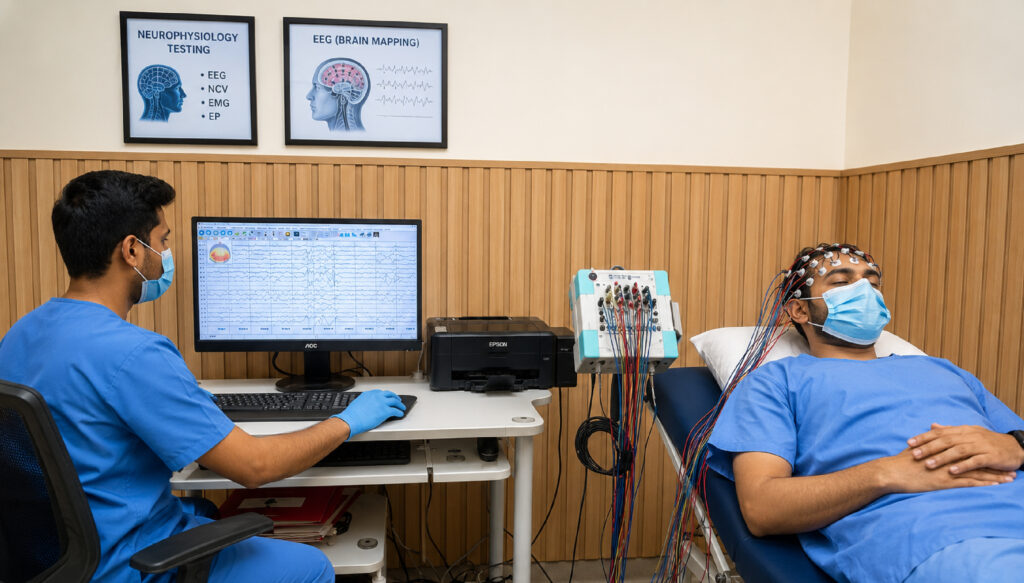
EEG (Electroencephalography) is a non-invasive diagnostic test that records the electrical activity of the brain using small electrodes placed on the scalp.
View All ( Uses)
- Routine EEG: Detects abnormal brain electrical activity associated with epilepsy, seizures, fainting episodes, and neurological disorders.
- Sleep EEG: Evaluates brain activity during sleep for diagnosing sleep disorders and sleep-related epilepsy.
- Sleep-Deprived EEG: Increases the chances of detecting epileptic activity not seen on a routine EEG.
- Video EEG: Simultaneously records brain activity and patient behavior to accurately diagnose seizure disorders.
- Prolonged EEG: Long-duration monitoring for intermittent seizures and unexplained episodes.
- Portable EEG Use: Bedside EEG for ICU patients, emergency cases, and critically ill patients.
Evoked Potentials (EP)
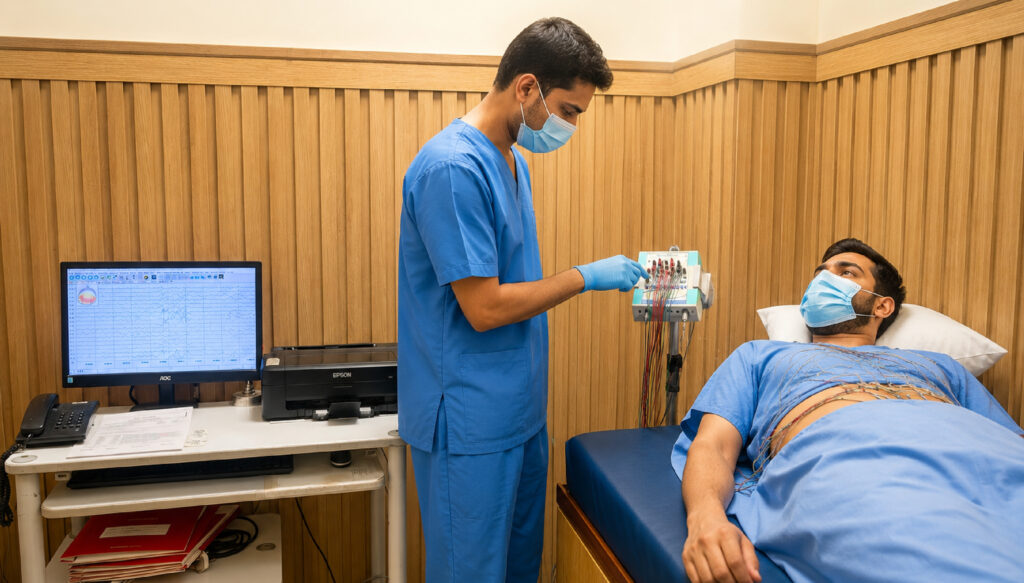
Evoked Potentials (EP) are non-invasive diagnostic tests that measure the brain’s electrical responses to specific sensory stimuli.
View All ( Uses)
- Visual Evoked Potential (VEP) : Assesses the visual pathway from the eyes to the brain. Useful in optic neuritis, multiple sclerosis, and unexplained vision loss.
- Brainstem Auditory Evoked Response (BERA / BAEP) : Evaluates hearing function and brainstem pathways. Used for hearing loss, tinnitus, vertigo, and newborn hearing screening.
- Somatosensory Evoked Potential (SSEP) : Evaluates sensory nerve pathways from the limbs to the brain. Helps diagnose spinal cord disorders and peripheral nerve diseases.
Nerve Conduction Study / Nerve Conduction Velocity (NCV)

Nerve Conduction Study (NCS) / Nerve Conduction Velocity (NCV) is a diagnostic test that measures how quickly and effectively electrical signals travel through peripheral nerves.
View All ( Uses)
- Upper Limb NCV: Detects carpal tunnel syndrome, ulnar neuropathy, and other upper limb nerve disorders.
- Lower Limb NCV: Diagnoses diabetic neuropathy, peripheral neuropathy, sciatica, and nerve injuries affecting the legs.
- Facial NCV: Evaluates facial nerve disorders such as Bell's palsy and facial nerve injuries.
- Brachial Plexus NCV: Assesses injuries affecting the nerves supplying the shoulder, arm, and hand.
Repetitive Nerve Stimulation Test (RNST)
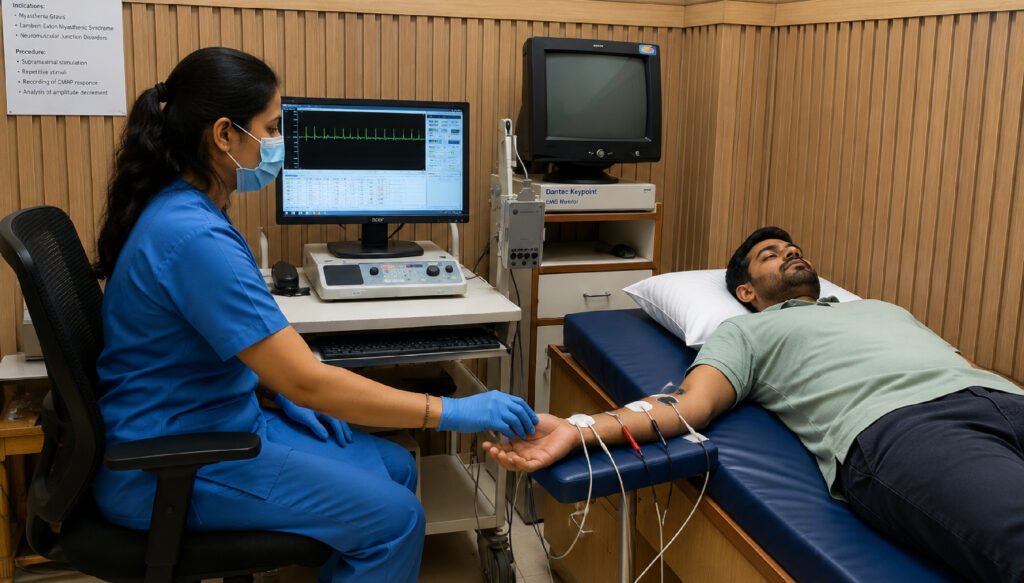
Repetitive Nerve Stimulation Test (RNST) is an electrodiagnostic test that evaluates the function of the neuromuscular junction by delivering a series of repetitive electrical stimuli to a motor nerve and recording the muscle’s response.
View All ( Use)
- Diagnoses neuromuscular junction disorders such as Myasthenia Gravis and Lambert-Eaton Myasthenic Syndrome.
Electromyography (EMG)
Electromyography (EMG) is a diagnostic test that measures the electrical activity of muscles at rest and during contraction using a fine needle electrode inserted into the muscle. It helps evaluate the health of muscles and the nerves that control them.
View All ( Use)
- Measures electrical activity in muscles during rest and contraction. Helps diagnose muscle diseases, peripheral neuropathies, motor neuron diseases, and nerve root disorders.
Fundus Photography
Fundus Photography is a non-invasive imaging test that captures detailed, high-resolution photographs of the retina, optic disc, macula, and retinal blood vessels at the back of the eye.
View All ( Use)
- Captures detailed images of the retina and optic nerve. Useful in detecting diabetic retinopathy, glaucoma, hypertensive retinopathy, optic neuritis, and other retinal disorders.
How Neurophysiology Testing Works
1.
Book Appointment
2.
Registeration
3.
Test or Procedure
4.
Expert Reporting
5.
Doctor consultation
- Safe & Painless
- Quick & Efficient
- Accurate Results
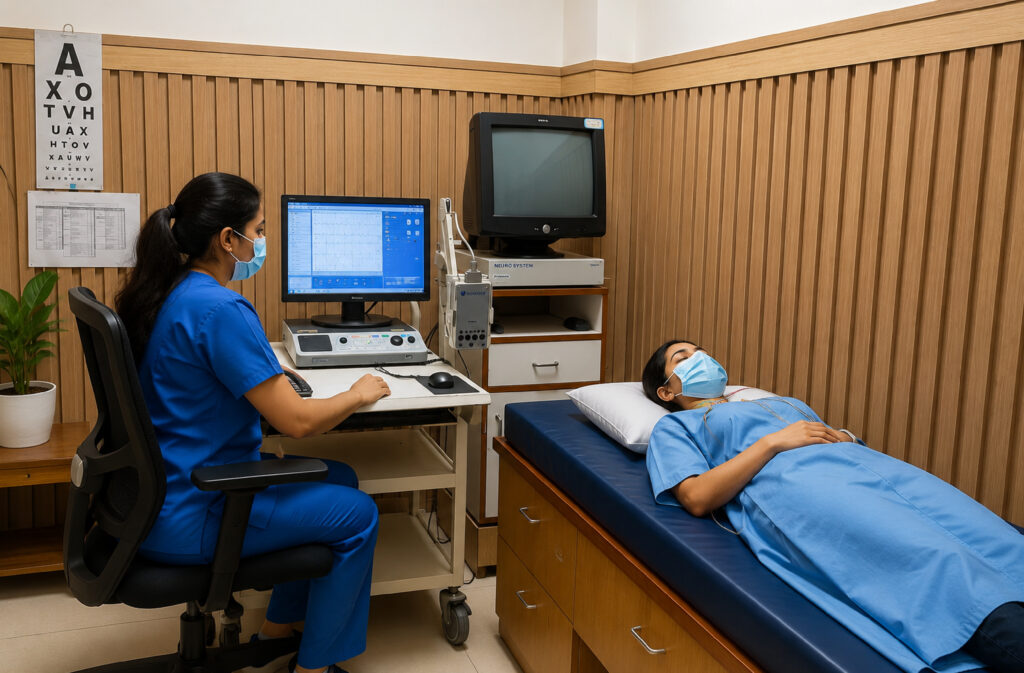
Is neurophysiology testing painful?
Most neurophysiology tests are painless. Some procedures like EMG may cause mild temporary discomfort.
How long do these tests take?
Most tests take between 20 and 90 minutes, depending on the procedure.
Do I need any preparation before the test?
Preparation depends on the test. Our team will provide detailed instructions before your appointment.
Are these tests safe?
Yes. Neurophysiology tests are safe, non-invasive or minimally invasive, and performed under expert supervision.
Will these tests help in diagnosis?
Yes. Neurophysiology tests help doctors accurately diagnose disorders of the brain, spinal cord, nerves, muscles, and neuromuscular junction.
What Our Patients Say
Get in Touch
177-178 Jagriti Enclave & A3-A4 Pushpanjali Vikas Marg Extn, New Delhi 110092
+91- 9015 111 222 0806 506 4310
jainhospital.com